

Introduction
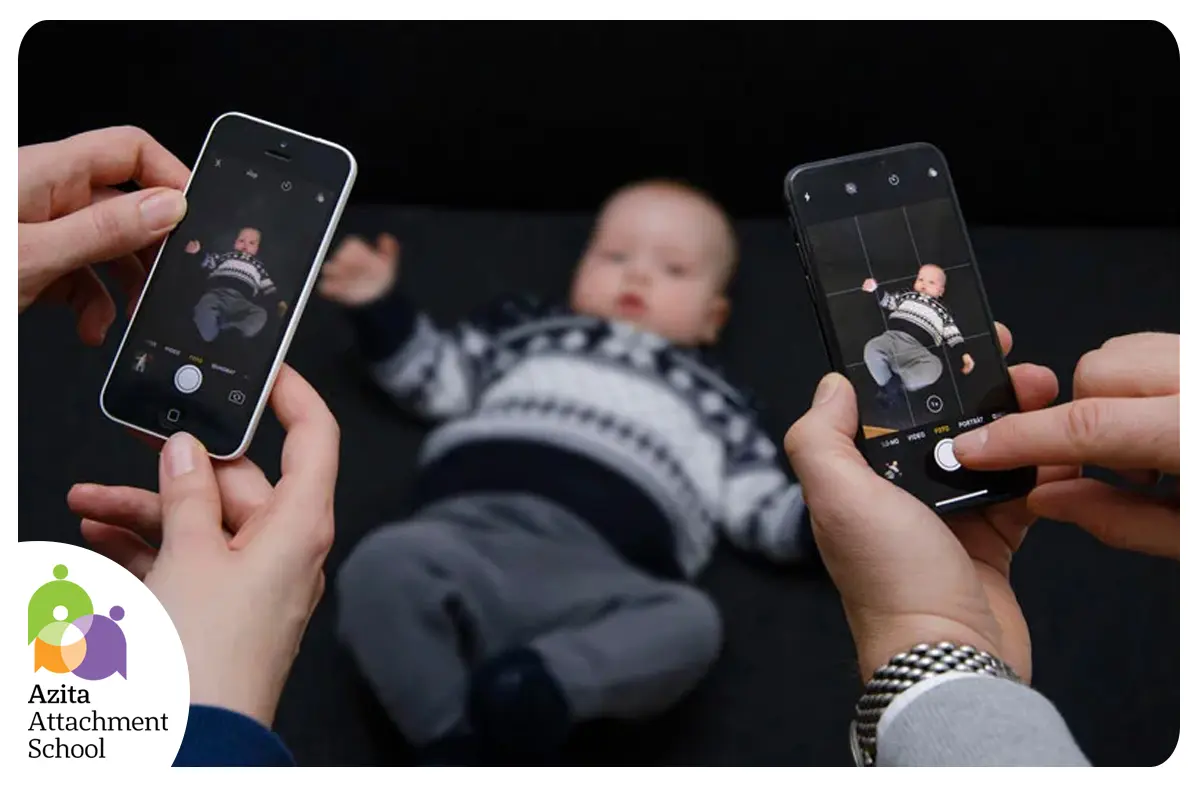
A parent begins posting photographs from the child’s first day of life.
Another shares a video of a crying or overwhelmed child with a humorous caption.
A parent seeking advice about bedwetting, anxiety, ADHD, or behavior describes the problem in a public group using the child’s name and image.
A family regularly posts school uniforms, birthday celebrations, daily routines, sports locations, and travel plans.
Most parents are not trying to cause harm. They may want to:
- celebrate their child;
- preserve memories;
- remain connected with distant relatives;
- receive parenting support;
- share knowledge;
- build a community;
- or earn income through online content.
Good intentions, however, do not guarantee safe outcomes.
Every image, video, and story can become part of the child’s digital identity—an identity created by adults before the child has the developmental capacity to decide.
The relevant question is not only:
“Is this photograph cute?”
Parents should also ask:
- What information does this reveal?
- Who can see it now and in the future?
- Does the child agree with the post?
- What could happen if the content leaves my control?
- Could my child later experience embarrassment, anger, or betrayal?
- Is the post primarily serving the child—or the adult?
- Can I achieve the same purpose through more limited sharing?
A child is not part of a parent’s media property. A child is a separate person with interests in privacy, safety, reputation, bodily autonomy, and participation in decisions involving personal information.
What Is Sharenting?
Sharenting refers to parents, caregivers, or relatives sharing information about children outside the immediate private family circle.
This may include:
- photographs;
- videos;
- audio recordings;
- names;
- dates of birth;
- locations;
- school information;
- health conditions;
- behavioral difficulties;
- personal stories;
- grades;
- developmental information;
- therapy experiences;
- daily routines.
Sharenting is not limited to public social-media accounts. Posting in large messaging groups, blogs, parenting groups, business pages, family channels, or private accounts also involves sharing.
A private account may reduce exposure, but it does not create complete control. Followers can save content, take screenshots, forward it, or show it to other people.
Is It Always Wrong to Post a Child’s Photograph?
Not necessarily.
The level of risk depends on:
- the content;
- the child’s age;
- the child’s opinion;
- the number and identity of viewers;
- whether the account is public or restricted;
- identifying information;
- timing and location;
- frequency of posting;
- the parent’s purpose.
Sending an ordinary family photograph to a few trusted relatives is different from publicly documenting a child’s health, distress, school, and daily life for thousands of followers.
No online sharing is completely risk-free. Parents need to balance the perceived benefit of sharing against the child’s interests in privacy, safety, and future autonomy.
Do Children Have a Right to Privacy?
The United Nations Convention on the Rights of the Child recognizes children’s rights to privacy, family life, home, correspondence, honor, and reputation.
Privacy is not relevant only when strangers, governments, or corporations collect information. Parental decisions also shape children’s privacy.
Parents necessarily make many decisions for young children. This responsibility does not mean unlimited ownership over the child’s image, body, story, medical information, or personal experiences.
As children develop greater understanding, their views should carry increasing weight.
Privacy does not mean hiding or feeling ashamed of a child. It means that, as far as developmentally possible, children can understand:
- what information is being recorded;
- what will be shared;
- who may see it;
- and whether they want a part of their life to become public.
What Is a Child’s Digital Footprint?
A digital footprint is the collection of information that remains about a person in digital environments.
A child’s footprint may begin before birth through pregnancy announcements, ultrasound images, health information, or the sharing of the future name and expected birth date.
After birth, photographs, videos, locations, milestones, medical information, and personal stories are added.
Digital information can be difficult to control after publication. Even when a parent deletes a post, it may have been:
- saved;
- forwarded;
- copied through a screenshot;
- archived;
- placed on another platform;
- republished without permission.
A child may enter adolescence or adulthood with a searchable identity that was created by other people.
What Information Creates Greater Risk?
Full Name and Date of Birth
Combining a full name with a date of birth, home area, and family details can make accurate identification easier.
School, Uniform, and Daily Schedule
School uniforms, club logos, regular travel routes, class schedules, and frequently visited locations can reveal patterns in a child’s life.
Live Location and Home Details
Real-time location, visible house numbers, exterior photographs, vehicle details, and recognizable landmarks may disclose more than the parent intended.
Nudity and Personal-Care Images
Bathing, changing, diapers, toilet learning, medical care, and any state of undress should remain private, even when a parent considers the photograph innocent or humorous.
Parents cannot control who saves an image or how it may be repurposed.
Medical and Psychological Information
Diagnoses, medication, assessment results, therapy, developmental conditions, and mental-health concerns are highly sensitive.
Parents may sometimes discuss a general experience to seek education or support, but identifying details should be removed. Adults should consider whether they have an ethical basis for making a child’s health history publicly searchable.
Distress, Shame, and Vulnerability
Tantrums, fear, punishment, bedwetting, academic failure, injuries, confessions, and emotional breakdowns may seem educational or entertaining to adults. The child, however, is in a vulnerable state.
A child’s pain should not become entertainment without meaningful consent.
Family Conflict
Divorce, custody disputes, parental conflict, finances, relationships with the other parent, and sibling problems can place a child inside a public narrative that the child did not choose.
What Does Consent Mean for Children?
Consent involves more than asking, “Can I post this?”
For agreement to be meaningful, the child needs an age-appropriate understanding of:
- where the content will appear;
- who may see it;
- whether viewers can save or share it;
- the difficulty of complete deletion.
Young children cannot provide fully informed consent to long-term digital consequences. The parent therefore carries greater responsibility to protect the child’s future interests.
As children grow:
- ask before posting;
- show the exact image and caption;
- accept “no” without pressure;
- allow the child to change the decision later;
- make reasonable efforts to delete content when asked.
Consent is not freely given when the child agrees mainly to prevent parental disappointment.
Statements such as:
“Everyone is waiting to see this.”
“It is my account, so I decide.”
“Grandma will be upset if you refuse.”
apply emotional pressure.
How Should Parents Decide for a Very Young Child?
When the child cannot understand online sharing, parents can use a future-self test:
- Could this be embarrassing at age 10, 15, or 25?
- Would I feel safe if comparable content about me were public?
- Does it reveal the child’s body, health, fear, or private behavior?
- Is publication genuinely in the child’s interests?
- Can the purpose be achieved through limited, private sharing?
- Would I still post if the content moved beyond my intended audience?
When uncertain, not posting is the safer choice.
How Can Sharenting Affect the Parent–Child Relationship?
A child may experience unauthorized posting as an intrusion.
Repeated sharing can communicate:
“My desire to post is more important than your feelings about your own image.”
This can affect trust, particularly when parents expect openness from the child while failing to respect the child’s privacy.
Older children and teenagers may:
- share less information with parents;
- avoid photographs and recordings;
- feel anxious when a parent attends an event with a phone;
- believe that family life has become a performance for an audience.
Asking the child is not merely conflict prevention. It models consent, bodily autonomy, and interpersonal boundaries.
Online Shaming as Discipline or Entertainment
Some parents publicize a child’s mistakes to teach a lesson, impose punishment, or attract attention.
Examples include:
- recording the child crying;
- publishing punishment;
- disclosing bedwetting or toilet problems;
- mocking speech, appearance, or body;
- sharing poor grades;
- requiring an on-camera confession.
These practices can create shame, bullying, distrust, and a permanent record of a temporary vulnerable moment.
Discipline belongs within a safe, private relationship. An online audience is not part of the child’s developmental guidance.
When a Child Becomes a Source of Income
Some family accounts depend on children’s images, stories, talent, or daily lives for revenue.
This creates additional ethical questions:
- Can the child genuinely refuse participation?
- Has ordinary family life become continuous performance?
- Are sleep, play, education, and friendships affected?
- Are painful moments posted because they produce greater engagement?
- How is income protected for the child’s future?
- What happens when the child no longer wants to appear?
- Has the parent-child relationship begun to resemble a producer-performer relationship?
Laws involving child influencers vary and are evolving. Legal compliance is only a minimum. Ethical decisions should also consider the child’s development, safety, autonomy, earnings, education, and right to withdraw.
Are Private Accounts Safe?
Privacy settings reduce exposure but do not eliminate it.
On a restricted account:
- a follower can save or forward an image;
- an account can be compromised;
- a device can be lost;
- the audience can change over time.
Before posting, assume that content may eventually move outside the intended group.
A restricted family album or direct sharing with selected individuals may be lower risk than public posting, although no digital system provides absolute safety.
Is Hiding the Child’s Face Enough?
Covering the face may reduce identifiability, but it is not always sufficient.
A child may still be identified through:
- name;
- voice;
- school uniform;
- location;
- relatives;
- home environment;
- birth date;
- personal narrative;
- a combination of small details.
Even without a face, posting a diagnosis, humiliating story, or intimate bodily detail may violate privacy.
The issue is not only the face. It is the complete information package.
Questions to Ask Before Posting
- Why do I want to share this?
- What benefit does the child receive?
- Does the child agree?
- Am I genuinely willing to accept “no”?
- Does the content reveal the child’s body, health, fear, mistakes, or private experiences?
- Are the school, location, name, or schedule identifiable?
- Does this need to be posted now?
- Could I send it only to selected people?
- What if classmates, teachers, or future employers see it?
- Would I still post if complete deletion were impossible?
- Would I want comparable information about myself published?
- Should this remain a family memory rather than public content?
If several answers create concern, do not post.
Safer Sharing Practices
Remove Identifying Details
Avoid full names, exact birth dates, school names, addresses, live schedules, regular locations, and health information.
Delay Location-Based Posts
Share travel or outing photographs after leaving the location rather than in real time.
Disable Location Data
Location tags and image metadata may reveal unintended details.
Review the Audience
Regularly examine followers and account settings. An online connection is not necessarily a trusted family contact.
Keep Intimate Images Private
Nudity, bathing, diapers, toileting, medical care, and intense emotional distress should not be published.
Involve the Child
Give the child increasing control with age. Discuss the reason for agreement or refusal and respect the answer.
Consider Other Children
Having your own child in a photograph does not authorize you to post classmates, friends, or relatives’ children without appropriate permission.
Separate Memory From Publication
Preserving a memory does not require making it public. Photographs can remain in a family album or a restricted archive.
What if Parents Have Already Shared Too Much?
The purpose is not to shame parents. Many families began posting without fully understanding the implications. Repair is still possible.
Review the Existing Footprint
Search the child’s name, images, family accounts, and old posts to identify what is available.
Delete or Restrict High-Risk Content
Prioritize:
- intimate images;
- medical information;
- school and location;
- repeated routines;
- punishment, crying, and humiliation;
- anything the child wants removed.
Deletion cannot guarantee that every copy disappears, but it remains worthwhile.
Ask Others to Remove Content
Contact relatives, schools, clubs, and friends when necessary and request deletion or reduced access.
Talk With the Child and Apologize if Appropriate
A parent might say:
“When you were younger, I shared photographs and stories before you could decide. I understand now that these are part of your privacy. I want us to review them together and remove what you do not want online.”
An apology does not weaken parental authority. It teaches respect and repair.
Create a Family Rule
A clear rule can apply to everyone:
“No family member posts another person’s photograph, voice, or personal story without permission.”
Parents must follow the rule as well.
An Attachment-Based Perspective on Privacy
In a secure attachment relationship, the child is not only protected but gradually recognized as a separate person with an individual mind, body, history, and boundaries.
A parent who asks before posting communicates:
- “Your body belongs to you.”
- “Your life story matters.”
- “Your opinion matters even when it differs from mine.”
- “I do not need to expose you in order to love or celebrate you.”
Privacy does not mean emotional distance. Respecting privacy is a form of care.
Children who see consent modeled at home are better positioned to:
- ask before sharing images of others;
- protect their own boundaries;
- manage personal information;
- understand consent in future relationships.
Is Posting a Child’s Image Illegal?
Laws differ across countries, provinces, and states. Relevant factors may include the content, commercial purpose, location of photography, parental authority, exploitation, earnings, and the use of identifying information.
There is no universal legal answer. Conduct may be legal while remaining ethically harmful or unsafe.
When posting involves commercial contracts, income, parental disputes, intimate images, exploitation, or serious security concerns, families should obtain advice from a qualified professional in their jurisdiction.
Conclusion
Parents often share from love, pride, isolation, or a desire for connection. Yet a moment that seems funny or touching to an adult may become part of a permanent identity the child did not choose.
Potential consequences include:
- loss of control over an image;
- disclosure of identifying information;
- unauthorized reuse;
- bullying and humiliation;
- damaged trust;
- creation of a digital identity without consent;
- commercialization of childhood.
Three principles can guide parents:
- share the least information necessary;
- give the child’s view increasing weight with age and maturity;
- place the child’s future safety and dignity above the adult’s immediate desire to post.
The central question is not only:
“Am I allowed to post this photograph as the parent?”
It is:
“Will my child later feel that I protected their image and story—or that I made private parts of childhood available to other people before they could understand or consent?”
References
- United Nations Convention on the Rights of the Child. Article 16: Protection of Privacy. This provision recognizes children’s rights to privacy, family life, correspondence, honor, and reputation. (UNICEF)
- United Nations Committee on the Rights of the Child. General Comment No. 25 on Children’s Rights in Relation to the Digital Environment. This document explains how children’s rights, including privacy, participation, safety, and best interests, apply in digital environments. (OHCHR)
- What You Need to Know About Sharenting. This source discusses privacy risks, child consent, children’s perspectives, and safer parental sharing. (UNICEF)
- Office of the Privacy Commissioner of Canada. 12 Online Privacy Tips for Parents and Caregivers. This guidance encourages parental role-modeling, respect for children’s personal information, and awareness that online images can be copied and retained. (Office of the Privacy Commissioner of Canada)
- Office of the Privacy Commissioner of Canada. Understanding Young Canadians’ Online Experiences in 2026. This report highlights young people’s desire for control over personal information and increasing decision-making responsibility as they mature. (Office of the Privacy Commissioner of Canada)
- American Academy of Pediatrics. Sharenting: 5 Questions to Ask Before You Post. This article explains that privacy settings cannot guarantee control and deleted content may remain copied or shared. (org)
- American Academy of Pediatrics. Social Media: Anticipatory Guidance. This clinical review discusses permanent digital footprints created before children can consent to online sharing. (Pediatrics in Review)
- Motevalli, S., et al. Parents’ Sharenting Behaviours: A Systematic Review of Motivations, Risks and Protective Strategies. This systematic review examines parental motivations and concerns involving privacy, safety, and children’s future digital identities. (PubMed Central)
- Berg, V., et al. Young Children and the Creation of a Digital Identity on Social Networking Sites: A Scoping Review. This review considers how parents help create children’s digital identities before children can independently decide. (PubMed Central)
- Walrave, M., et al. Mindful Sharenting: How Parents Balance Between Sharing and Protecting Children’s Online Privacy. This study examines parental strategies for balancing family sharing with children’s privacy. (PubMed Central)
- Conti, M. G., et al. Sharenting: Characteristics and Awareness of Parents. This study examines parental awareness of risks associated with posting children’s images, videos, and personal information. (PubMed Central)




دیدگاه خود را بنویسید