

Introduction
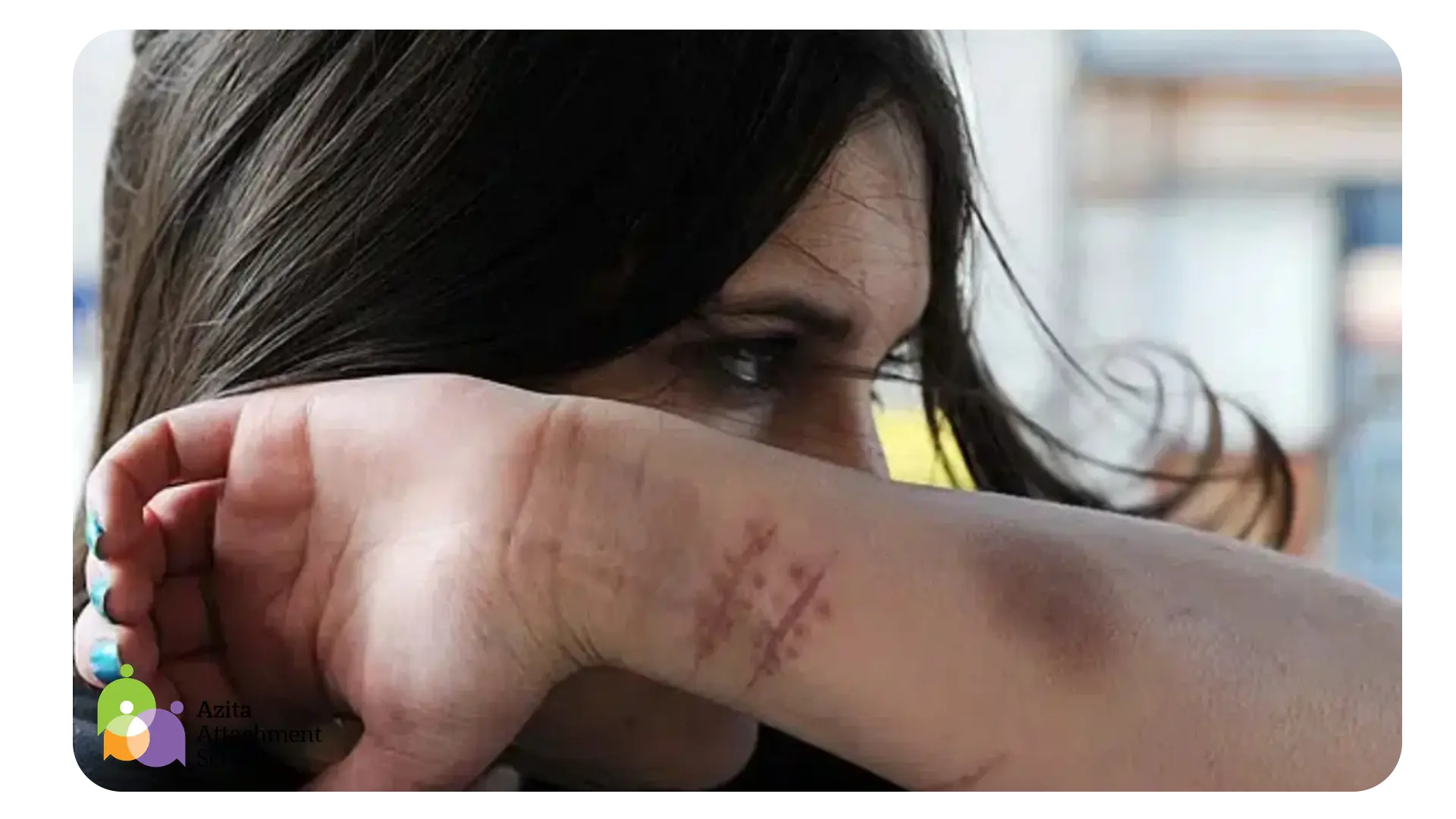
A parent notices that a teenager covers much of the body even in hot weather.
Another finds unexplained stains, injuries, or unusual objects but has no idea how to begin a conversation.
A teenager spends hours viewing, saving, or reposting content about hopelessness, self-harm, and death.
Parents may experience fear, anger, shock, guilt, and helplessness:
“Why would my child do this?”
“What did we do wrong?”
“Does this mean my child wants to die?”
“Did social media teach this behavior?”
“Should I take the phone away immediately?”
“Will asking about it make things worse?”
Self-harm is serious, but a panicked, punitive, or humiliating response may drive the behavior further underground.
The adult’s first task is not to discover every cause in one conversation. The immediate priorities are:
- assessing physical safety;
- evaluating suicide risk;
- reducing access to dangerous means;
- creating space for discussion without shame;
- and arranging professional assessment.
A teenager who self-harms is not bad, dramatic, manipulative, or ungrateful. The behavior indicates that emotional pressure or internal experience has exceeded the teenager’s current coping capacity.
What Is Self-Harm?
Self-harm involves intentionally damaging or injuring one’s own body. It may occur with or without an intention to die.
For many adolescents, death is not the immediate goal. The behavior may be used to reduce emotional pressure, interrupt numbness, communicate distress, punish the self, or regain a sense of control.
However, adults cannot assume there is no suicide risk simply because the behavior appears to have another purpose.
Nonsuicidal self-injury and suicide attempts are distinct concepts, but they can overlap. A teenager who self-harms without suicidal intent at one time may experience suicidal thoughts at another. Repeated self-harm is associated with increased risk for suicidal thinking and behavior.
Every disclosure or discovery of self-harm therefore requires a direct suicide-risk assessment.
Why Might a Teenager Self-Harm?
There is no single explanation. Similar behavior can serve different functions for different adolescents.
To Reduce Emotional Pressure
Before self-harm, some teenagers experience anger, panic, shame, grief, or emotional overload as unbearable.
Physical injury may temporarily redirect attention away from emotional pain or reduce physiological arousal. Because this relief is short-lived, the brain may begin to learn self-harm as a rapid coping response, increasing the possibility of repetition.
To Interrupt Numbness
Not every teenager feels intense emotion beforehand. Some describe emptiness, numbness, detachment, or feeling unreal.
They may say:
“I could not feel anything.”
“I needed to know I was still here.”
Such experiences may occur alongside depression, trauma, dissociation, or severe psychological stress.
To Punish the Self
A teenager who experiences intense self-hatred, guilt, or worthlessness may believe pain is deserved.
These beliefs may develop or worsen in the context of:
- chronic criticism;
- humiliation;
- bullying;
- academic failure;
- rejection;
- abuse;
- family conflict;
- or overwhelming guilt.
To Express Distress Without Words
Some adolescents cannot say:
“I am falling apart.”
“I need help.”
“I feel completely alone.”
“I cannot talk about what happened.”
The body may become the place where an unspoken experience is expressed.
To Regain Control
When a teenager feels powerless in relation to school, family, body, peers, or the future, self-harm may seem like one area under personal control.
A completely controlling parental response can unintentionally reinforce this struggle. Safety limits are essential, but teenagers should be included, wherever possible, in treatment and safety decisions.
To Cope With Trauma
Self-harm may be associated with:
- physical or sexual abuse;
- domestic violence;
- bereavement;
- bullying;
- forced migration;
- discrimination;
- unsafe relationships;
- other traumatic experiences.
Self-harm does not prove that trauma occurred, but assessment should sensitively consider the possibility.
To Communicate or Be Seen
Sometimes injuries are shown or disclosed. Adults may describe this as “attention-seeking.”
But if a teenager has reached the point of harming the body to communicate distress, the central issue is not that attention is undeserved. The issue is why injury became the available language for requesting care.
Wanting attention, connection, and recognition is human. The appropriate response is to investigate the suffering and teach safer ways to request support.
Peer and Online Influence
Exposure to self-harm among peers or repeated online content may normalize or trigger the behavior for some vulnerable teenagers.
This does not mean the internet alone causes self-harm. Individual vulnerability, mental-health difficulties, environmental pressure, peer dynamics, and online experiences often interact.
Conditions That May Occur Alongside Self-Harm
Self-harm does not explain the teenager’s entire mental-health picture. It may occur alongside:
- depression;
- anxiety;
- post-traumatic stress;
- emotion-regulation difficulties;
- eating disorders;
- substance use;
- attention and impulse-control difficulties;
- bullying;
- intense relationship problems;
- some mood or personality disorders.
Some teenagers do not meet criteria for another clear diagnosis but still need treatment focused on understanding the behavior and building alternatives.
Possible Warning Signs
No single sign confirms self-harm. A pattern of changes, however, warrants calm inquiry.
Possible signs include:
- repeated injuries with vague or inconsistent explanations;
- unusually concealing clothing;
- avoiding situations that involve changing clothes;
- unexplained stains on clothing or bedding;
- keeping potentially dangerous items without a clear reason;
- spending long periods alone after conflict;
- increasing isolation;
- marked mood changes;
- statements of self-hatred or worthlessness;
- repeated writing or artwork involving injury or death;
- following, saving, or sharing self-harm content;
- school decline;
- abandoning activities;
- worsening anxiety, depression, or numbness;
- consistently covering particular parts of the body.
Parents should not force a teenager to undress as a way of obtaining proof. A respectful conversation and professional assessment are safer and less humiliating.
Self-Harm and Suicide Attempts: What Is the Difference?
In nonsuicidal self-injury, the primary intention is generally to alter an emotional state rather than die.
In a suicide attempt, the person acts with at least some intention to cause death.
The distinction may not be obvious. Intent can be:
- mixed;
- unclear;
- changeable;
- concealed;
- difficult for the teenager to understand.
Parents should never conclude:
“My teenager said there was no intention to die, so there is no danger.”
Important questions include:
- Has the teenager been thinking about death?
- Has the teenager wished not to wake up?
- Is there a suicide plan?
- Is there access to highly dangerous means?
- Has there been a previous attempt?
- Can the teenager remain safe right now?
Professional assessment is important, but parents should also ask directly when concerned.
Does Asking About Suicide Increase the Risk?
No. Calm, direct questions do not create suicidal thoughts.
A parent might say:
“I need to ask clearly because your safety matters to me. When you hurt yourself, were you trying to die?”
“Have you been thinking that you do not want to be alive?”
“Have you made a plan to seriously harm yourself or die?”
If the teenager says yes, respond seriously. Avoid screaming, interrogating, threatening, or saying, “How could you do this to us?”
What Should Parents Do After Discovering Self-Harm?
Assess Physical Safety First
If there may be serious injury, poisoning, altered consciousness, breathing difficulty, or any uncertain medical risk, obtain urgent medical assessment.
Do not rely solely on the teenager’s reassurance that the injury is minor.
Regulate the First Reaction
Shock and fear are understandable, but intense parental panic can close communication.
A parent can say:
“It hurts to know that you have been carrying this much distress. I am not here to shame you.”
“I am glad I know now, because we can get help.”
“First, I need to make sure your body is safe.”
Take the Behavior Seriously Without Reducing the Teenager to It
Avoid:
“You are dangerous.”
“You are a self-harmer.”
“We can never trust you again.”
Try:
“You are a person who has been using a harmful method to survive overwhelming moments. We need to help you build safer ways to get through them.”
Ask Directly Without Interrogating
Useful questions include:
- “What was happening emotionally before this?”
- “What changed for a short time after you did it?”
- “How long has this been happening?”
- “Does anyone else know?”
- “Were thoughts of death present?”
- “What could help you stay safe tonight?”
Parents do not need detailed descriptions of the method or injury. The goal is to understand function, frequency, and safety—not to reconstruct the act.
Do Not Promise Complete Secrecy
If the teenager says, “Do not tell anyone,” a parent can respond:
“I will respect your privacy as much as I can, and I will involve you in deciding what is shared. But I cannot keep a threat to your life or health completely secret.”
Responses That Can Make the Situation Worse
Shame
Statements such as:
“This is ridiculous.”
“You only want attention.”
“You have embarrassed this family.”
increase shame and secrecy.
Threats
“If you ever do this again, I will take everything away.”
Threats may remove evidence from the parent’s view without removing the behavior.
Demanding a Promise
“Promise you will never do it again” is not a safety plan. A teenager may sincerely want to stop but lack effective skills during the next crisis.
Total Control Without Collaboration
Restricting access to dangerous means is necessary. Humiliating searches, forced exposure of the body, and punitive surveillance can damage trust.
The level of supervision should match the risk and ideally be guided by a qualified clinician.
Focusing Only on Stopping the Injury
Treatment must examine what self-harm accomplishes for the teenager and how the same underlying need can be addressed safely.
How Can Harmful Online Content Affect Teenagers?
Online spaces can provide both support and risk.
Harmful content may:
- normalize or romanticize self-harm;
- turn suffering into a social identity;
- encourage comparison or escalation;
- trigger urges;
- repeatedly expose the teenager to distressing images and narratives;
- create fear that recovery will lead to rejection from a community.
Recommendation systems may display increasing amounts of similar content after a teenager watches or searches for a few related posts. This can create a highly concentrated stream of triggering material.
At the same time, some online communities reduce isolation, offer accurate education, and encourage treatment.
The issue is not simply time spent online. The type of content, the way it is used, and the teenager’s psychological state all matter.
Should Parents Immediately Confiscate the Phone?
When immediate danger is present, temporary restriction of triggering content may be part of safety planning.
However, sudden and punitive removal of every communication device may:
- separate the teenager from supportive peers;
- increase secrecy;
- push activity toward hidden accounts or devices;
- leave the underlying problem untouched.
Parents and clinicians can explore:
- What content is the teenager viewing?
- How does the teenager feel afterward?
- Which accounts intensify urges?
- Which accounts genuinely support recovery?
- What content can be blocked, reported, or hidden?
- Who can the teenager contact when triggered?
- Does late-night or isolated use increase danger?
The goal is not surveillance alone. It is to help the teenager recognize dangerous content and participate in a safer digital plan.
What Is a Safety Plan?
A safety plan is a practical, individualized plan for periods when self-harm or suicidal urges increase.
With professional support, it may identify:
- early warning signs;
- triggers;
- short-term coping steps;
- safe people to contact;
- safer places;
- professional resources;
- family actions to reduce access to dangerous means;
- clear escalation steps if risk increases.
A safety plan is not the same as a “no-harm contract” or a promise.
It needs to be specific, accessible, realistic, and developed collaboratively.
How Are Alternative Coping Strategies Selected?
There is no universal list that works for every teenager. Alternatives should correspond to the function of self-harm.
A teenager trying to reduce emotional arousal may benefit from:
- leaving a conflict temporarily;
- contacting a safe person;
- appropriate physical movement;
- paced breathing;
- washing the face;
- music;
- writing or drawing;
- remaining in a shared family space;
- using skills learned in therapy.
A teenager experiencing numbness or dissociation may need grounding, sensory orientation, and safe human presence.
These strategies do not replace treatment and should not be offered as a generic solution without understanding the teenager’s needs and risk.
An Attachment-Based Perspective
Self-harm can create a painful relational cycle:
The teenager hides the behavior because of shame.
The parent discovers it, panics, and increases control.
The teenager feels misunderstood and withdraws further.
The parent sees more distance and intensifies monitoring.
An attachment-based approach aims to preserve safety and relationship simultaneously.
The parent can communicate:
“I will not ignore this behavior because your body and life matter.”
and:
“I will not humiliate or abandon you because of it.”
Secure caregiving means recognizing the suffering, setting necessary safety limits, involving professionals, and refusing to reduce the teenager to a dangerous behavior.
What Does Professional Assessment Involve?
Comprehensive assessment may review:
- physical health and current injuries;
- pattern and frequency of self-harm;
- the function of the behavior;
- suicidal thoughts, plans, and behavior;
- previous attempts;
- depression and anxiety;
- trauma and abuse;
- bullying and peer relationships;
- substance use;
- eating difficulties;
- sleep and physical health;
- family circumstances;
- access to dangerous means;
- online exposure;
- protective relationships and strengths;
- ability to seek help.
Assessment should not rely only on a simple risk category or numerical score. Needs, safety, context, and follow-up must be individualized.
Treatment for Adolescent Self-Harm
Treatment depends on the causes, risks, and co-occurring conditions. It may include:
- emotion-regulation treatment;
- dialectical behavior therapy adapted for adolescents;
- cognitive behavioral therapy;
- mentalization-based treatment;
- trauma treatment;
- treatment for depression or anxiety;
- family sessions;
- parent guidance;
- school collaboration.
There is no medication that specifically cures self-harm. Medication may be prescribed for an accompanying condition such as depression or anxiety.
Effective treatment helps the teenager:
- recognize crisis signals earlier;
- name emotions;
- ask for help;
- tolerate conflict and distress;
- address shame and self-criticism;
- build safer ways to regulate.
When Is It an Emergency?
Immediate help is needed when:
- physical injury may be serious;
- a dangerous amount of medication or another substance may have been taken;
- consciousness, breathing, or physical condition has changed;
- the teenager has suicidal intent;
- there is a specific suicide plan;
- highly lethal means are accessible;
- the teenager cannot remain safely with an adult;
- severe agitation or loss of contact with reality is present;
- the family cannot maintain safety.
Do not leave the teenager alone. Reduce access to dangerous means and seek immediate assistance through local emergency or crisis services.
Conclusion
Teen self-harm should not be dismissed as drama, fashion, manipulation, or simple attention-seeking.
It may be an attempt to:
- reduce emotional overload;
- interrupt numbness;
- punish the self;
- communicate distress;
- regain control;
- request help.
Self-harm does not always mean suicidal intent, but it is associated with increased suicide risk and must be taken seriously.
A helpful parental response includes:
- assessing medical safety;
- asking directly about suicide;
- avoiding shame and punishment;
- reducing access to dangerous means;
- addressing harmful online exposure;
- developing a safety plan;
- obtaining professional assessment.
The central question is not only:
“How do I force this behavior to stop?”
It is:
“What pain or need is this behavior managing, and how can we give the teenager safer ways to regulate, connect, and ask for help before the next crisis?”
References
- American Academy of Child and Adolescent Psychiatry. Self-Injury in Adolescents. This guide reviews possible functions of self-injury, associated mental-health conditions, and the need for professional evaluation. (AACAP)
- American Academy of Pediatrics. When Children and Teens Self-Harm. This resource explains the distinction between nonsuicidal self-injury and suicide while emphasizing the elevated long-term risk associated with repeated self-harm. (org)
- National Institute for Health and Care Excellence. Self-Harm: Assessment, Management and Preventing Recurrence. This guideline addresses physical care, psychosocial assessment, safety planning, family involvement, treatment, and prevention of recurrence. (NICE)
- American Academy of Pediatrics. What Should I Do if My Child or Teen Is Thinking About Suicide? This article explains that direct questions about suicide do not increase risk and discusses assessment and safety planning. (org)
- American Academy of Pediatrics. Brief Interventions That Can Make a Difference in Suicide Prevention. This resource describes safety planning and reducing access to highly lethal means. (AAP)
- Nesi, J., et al. Social Media Use and Self-Injurious Thoughts and Behaviors: A Systematic Review and Meta-Analysis. This review examines associations between social-media experiences and self-injurious thoughts and behaviors. (PubMed Central)
- Biernesser, C., et al. Social Media Use and Deliberate Self-Harm Among Youth: A Systematized Narrative Review. This review considers both risks and potential supportive functions of online environments. (PubMed Central)
- Hamilton, J. L., et al. Self-Harm Content on Social Media and Proximal Risk for Self-Harm Among Adolescents. This study examines exposure to self-harm content and near-term self-harm risk among teenagers. (PubMed Central)
- Kothgassner, O. D., et al. Efficacy of Dialectical Behavior Therapy for Adolescent Self-Harm and Suicidal Ideation: A Systematic Review and Meta-Analysis. This review supports adolescent-adapted dialectical behavior therapy for reducing self-harm and suicidal ideation. (PubMed Central)
- Witt, K. G., et al. Interventions for Self-Harm in Children and Adolescents. This review examines evidence for psychological interventions intended to reduce repeated self-harm among children and adolescents. (Cochrane Library)




دیدگاه خود را بنویسید