

Introduction
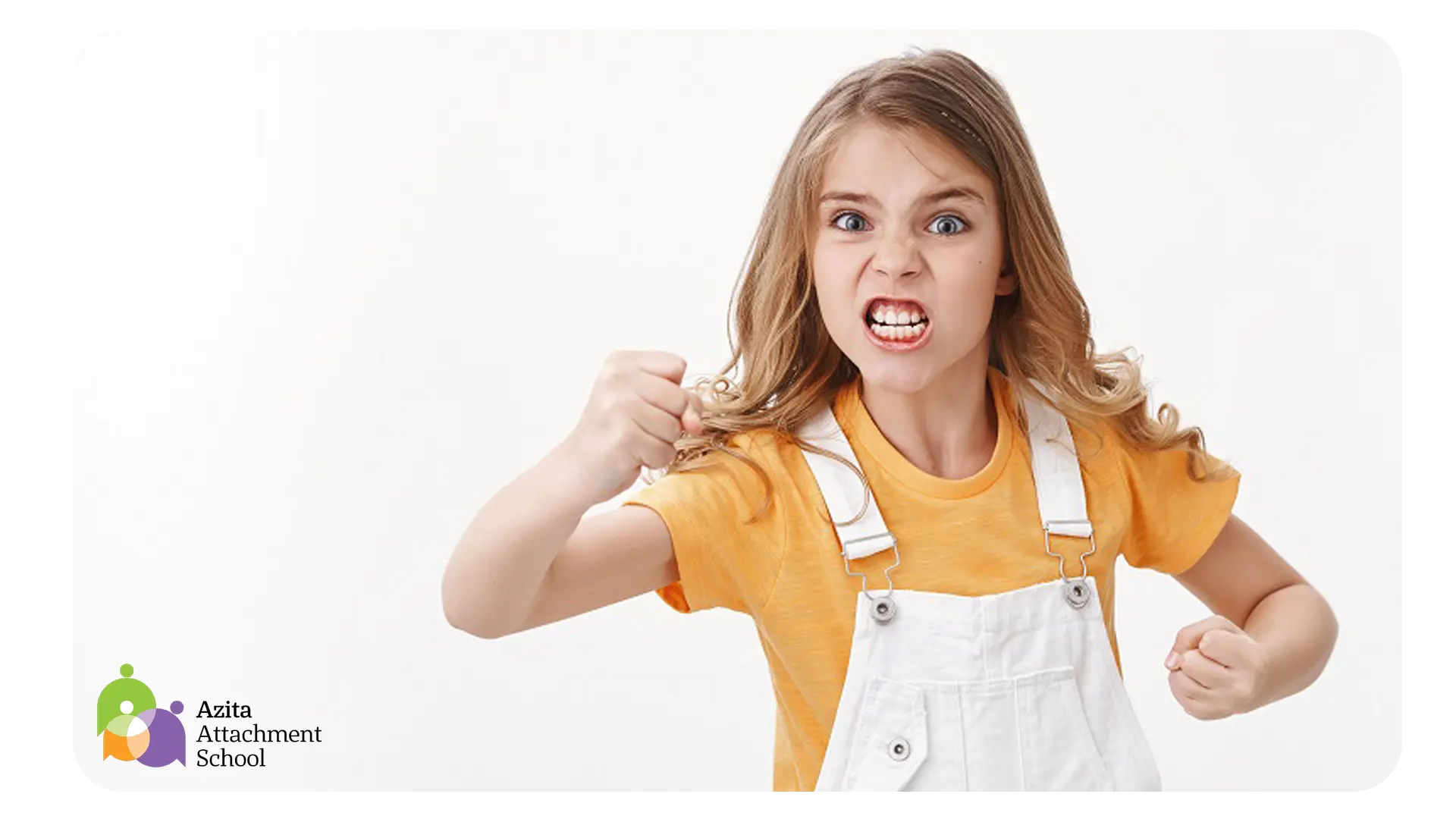
A four-year-old hits his mother when she refuses to buy another toy.
A seven-year-old loses a game, throws the pieces across the room, and kicks her sister.
A ten-year-old appears calm at school but comes home exhausted, screams at minor requests, slams doors, and throws objects.
Parents facing these situations may wonder:
“Why is my child so angry?”
“Is this deliberate?”
“If I do not stop it immediately, will it become worse?”
“Is this normal behavior, or is something deeper going on?”
The short answer is that aggression is a behavior. It is not a complete explanation, a diagnosis, or a child’s identity.
A child may behave aggressively because of frustration, fatigue, hunger, sensory overload, anxiety, language difficulties, impulsivity, bullying, family stress, trauma, or limited emotion-regulation skills. In other cases, persistent and severe aggression may be part of a developmental, emotional, or behavioral condition that requires professional assessment.
Understanding the cause does not mean permitting harm. A parent can communicate two messages at the same time:
“I will not allow you to hurt someone.”
and:
“I want to understand what happened and what kind of help you need.”
What Is Aggression in Children?
Aggression includes behavior that can harm another person, the child, an animal, or property.
It may take several forms.
Physical Aggression
- hitting
- kicking
- pushing
- biting
- scratching
- pulling hair
- throwing objects at people
- damaging property
Verbal Aggression
- screaming
- insulting
- threatening
- humiliating
- using language intended to frighten or hurt someone
Relational Aggression
Relational aggression may become more noticeable during the school years and adolescence. It can include:
- deliberately excluding someone
- spreading rumors
- threatening to end a friendship
- controlling another person’s relationships
- using private information to cause harm
- persuading a group to reject a child
Not every harmful act is carefully planned. A child who throws an object during an overwhelming outburst may have temporarily lost access to the skills needed to stop and think. This does not remove the need for limits or responsibility, but it changes how an effective adult responds.
Is Aggression a Normal Part of Childhood?
Some hitting, pushing, biting, and yelling can occur during early development. Young children are still developing:
- impulse control
- language for complex emotions
- frustration tolerance
- awareness of consequences
- flexible problem-solving
- the ability to calm themselves without adult support
A two-year-old whose toy is taken may push another child before being able to say, “I was still using that.”
Developmentally common does not mean harmless or unimportant. Even young children need adults to protect others, stop harmful behavior, and repeatedly teach safer alternatives.
Parents and professionals should consider more than whether aggression is present. Important questions include:
- How often does it happen?
- How severe is it?
- Has anyone been injured?
- Is it appropriate for the child’s developmental level?
- What usually happens immediately before it?
- Does it occur at home, school, and with peers, or only in one setting?
- How does the child respond after becoming calm?
- Is it interfering with relationships, learning, or safety?
- Is the aggression becoming more frequent or intense?
Two Important Patterns of Aggression
Reactive Aggression
Reactive aggression occurs in response to frustration, fear, rejection, humiliation, or a perceived threat.
A child may say:
“He made fun of me first.”
“I thought she was going to take my things.”
“I couldn’t stand it anymore.”
The child’s alarm system may activate rapidly, producing an impulsive fight response before the child considers other options.
Proactive or Goal-Directed Aggression
In proactive aggression, the child may use intimidation or harm to obtain an object, control a game, frighten others, avoid a demand, or gain social status.
These patterns are not always completely separate. The same child may show reactive aggression in one situation and goal-directed aggression in another. Understanding the pattern helps adults select an appropriate intervention.
What Can Be Behind a Child’s Aggression?
1. Difficulty Regulating Strong Emotions
Some children experience anger, fear, shame, and frustration very intensely but have not yet developed reliable ways to regulate those emotions.
When arousal exceeds the child’s capacity, the body may enter a fight response. At that point, the child has less access to the mental processes needed for language, inhibition, reflection, and anticipation of consequences.
This does not mean the child has no responsibility. It explains why a long lecture during the peak of an outburst is usually ineffective.
2. Frustration and Limited Language
A child who cannot communicate:
- “This task is too difficult,”
- “I need more space,”
- “I felt embarrassed when they laughed,”
- or “I do not know how to join the game”
may communicate distress through the body.
Language delays, learning difficulties, and social-communication differences can all contribute to aggressive behavior.
3. Fatigue, Hunger, Pain, or Poor Sleep
Parents sometimes search for a complex psychological cause when a child is:
- sleep-deprived
- hungry
- physically unwell
- in pain
- overstimulated
- or exhausted by an overly demanding schedule
A sudden behavioral change should include consideration of sleep, physical health, nutrition, medication, and other possible medical factors.
4. Sensory Overload
Noise, light, crowds, touch, smell, clothing, and busy environments can be intensely distressing for some children.
A child who pushes in a crowded room may be attempting to create physical space. The behavior must still be stopped, but punishment alone is unlikely to prevent recurrence if the sensory trigger remains unidentified.
5. Impulsivity and Attention Difficulties
Some children act before they have time to think. Children with attention-deficit/hyperactivity disorder may have difficulty inhibiting impulses, tolerating frustration, waiting, and shifting between activities.
Aggression alone does not indicate ADHD, and not every impulsive child is aggressive. A full developmental and behavioral assessment is needed.
6. Anxiety
Childhood anxiety does not always look like fearfulness, crying, or clinging. Some anxious children become:
- irritable
- controlling
- oppositional
- verbally aggressive
- or physically reactive
A child who becomes aggressive before school, during separation, in social settings, or when plans change may be experiencing anxiety beneath the anger.
7. Shame, Failure, or Feelings of Inadequacy
Some children become aggressive when they believe their weakness or confusion is about to be exposed.
A child may:
- throw a pencil during difficult homework
- destroy a game after losing
- mock a classmate when unsure of an answer
- attack peers before they have a chance to reject him
In such situations, anger may protect the child from shame, helplessness, or fear of failure.
8. Bullying and Peer Difficulties
A child who hits at school may also be experiencing bullying, exclusion, or repeated provocation.
Children do not always report the whole story, particularly when they fear punishment, retaliation, or being called a tattletale. Adults need to examine the sequence leading to the final aggressive act rather than focusing only on who hit last.
9. Family Conflict, Violence, or Instability
Children learn how conflict is managed by observing the relationships around them.
Repeated exposure to screaming, humiliation, threats, intimidation, or violence can teach a child that power is achieved through fear and force. Chronic instability, intense parental conflict, frequent moves, and severe family stress can also keep the child’s stress-response system highly activated.
This does not mean that childhood aggression can always be blamed on parents. Multiple biological, developmental, relational, and environmental factors may be involved. Nevertheless, changing harmful patterns within the family is often an important part of treatment.
10. Trauma and a Persistent Sense of Danger
A child who has experienced abuse, violence, loss, a serious accident, forced migration, or another overwhelming threat may perceive danger more readily.
The child may:
- misinterpret neutral behavior as threatening
- react defensively with little warning
- panic during unexpected touch
- attack before believing someone else will attack first
- remain chronically alert to rejection or danger
Not all aggression is trauma-related. However, a comprehensive assessment should consider whether the child has experienced events that disrupted safety.
11. Developmental or Mental-Health Conditions
Aggression can occur alongside many conditions, including:
- ADHD
- autism
- language or learning disorders
- anxiety
- depression with irritability
- post-traumatic stress disorder
- oppositional defiant disorder
- conduct disorder
- severe mood dysregulation
- other developmental or emotional difficulties
This list is not intended for home diagnosis. Similar behavior can arise from very different causes in different children.
Does Aggression Mean a Child Has Conduct Disorder?
Not necessarily.
Many children occasionally become angry, defy an adult, or hit during an overwhelmed moment. A disruptive behavior disorder is considered when the pattern is:
- unusually severe
- developmentally inappropriate
- persistent over time
- present across important settings
- and significantly disruptive to safety, relationships, school, or the rights of others
Planned violence, serious cruelty toward people or animals, dangerous destruction of property, threatening others with weapons, injuring someone during theft, or showing no concern about serious harm require prompt professional assessment.
Parents should not diagnose or label a child based on one behavior or an online checklist. Assessment should consider development, environment, relationships, learning, trauma exposure, physical health, and emotional functioning.
What Does an Attachment-Based Perspective Add?
An attachment-based approach does not view aggression only as disobedience. It asks:
- What is the child experiencing internally?
- What became threatening in this moment?
- Is the child feeling rejected, ashamed, helpless, or powerless?
- Does the child need safe closeness or temporary space?
- Does the child still experience the relationship as dependable during conflict?
An attachment perspective does not mean removing boundaries.
A secure response includes three parts:
- recognizing the child’s internal experience;
- stopping harmful behavior;
- teaching a safer alternative.
Empathy without boundaries does not create safety. Boundaries without connection may create fear, concealment, or escalating power struggles.
What Should Parents Do During an Aggressive Incident?
Protect Safety First
If a child is hitting, kicking, biting, or throwing objects:
- move other children away
- remove dangerous objects
- create safe physical distance
- reduce noise and stimulation where possible
- use brief, clear language
A parent might say:
“I will not let you hit.”
“I am moving back so everyone’s body stays safe.”
“I am putting this object away because someone could be hurt.”
The immediate goal is safety—not winning a power struggle.
Lower Your Voice
Adult yelling commonly increases the child’s alarm and arousal. Calm does not mean passive or permissive. A parent can be serious, firm, and decisive without threatening or humiliating the child.
Avoid Long Explanations During the Peak
The height of an aggressive outburst is not the best time to ask:
“How many times have I told you?”
“Why did you do that?”
“How would you feel if someone hit you?”
“Promise you will never do this again.”
Teaching becomes more effective after the child has regained enough regulation to listen and think.
Accept the Emotion and Limit the Behavior
Parents can say:
“You are very angry, and hitting is not allowed.”
“I know you did not want the game to end. I will not let you throw the controller at me.”
“You are allowed to be upset. You are not allowed to hurt your sister.”
These statements communicate that emotions are acceptable while harmful actions are not.
Consider Whether the Child Needs Space or Presence
Some children regulate through a calm adult’s nearby presence. Others experience touch and closeness as threatening when highly activated.
Instead of forcing a hug, a parent might say:
“I am here. Do you want me nearby, or do you need more space?”
If the child cannot answer, the adult can maintain a safe distance while remaining available.
What Should Happen After the Child Calms Down?
Reconnect Before Teaching
Do not begin with shame.
Instead of saying:
“Do you understand what a terrible child you were?”
try:
“Your body is calmer now. We can look at what happened.”
Reconnection does not remove accountability. It helps the child reflect without becoming overwhelmed by defensiveness or shame.
Examine the Sequence
Ask:
- What happened before the aggression?
- What did the child think was happening?
- What did the child notice in the body?
- What escalated the situation?
- How did adults respond?
- What happened after the behavior?
- Did the child gain something or escape something through aggression?
Instead of asking only, “Why did you hit?” consider:
“What happened just before you hit?”
“What was your body telling you?”
“What could you do next time so that nobody gets hurt?”
Teach Responsibility and Repair
Repair is more than a forced “sorry.”
Depending on the situation, the child may:
- check whether the other person is okay
- help repair or replace damaged property
- clean the area
- write a note or draw a picture
- make a plan for preventing a similar incident
An apology is more meaningful when the child understands the harm and takes part in repairing it.
Practice Replacement Skills
“Do not hit” is incomplete instruction. The child also needs to know what to do instead.
Parents can practice:
- saying, “Stop. I am still using that.”
- asking an adult for help
- walking away
- requesting a break
- squeezing a soft object
- drinking water
- naming the feeling
- using a visual card or signal for help
- stamping feet without harming anyone
- moving to a lower-stimulation space
Practice should occur during calm periods, not only after an incident.
Responses That Can Make Aggression Worse
Hitting a Child to Teach That Hitting Is Wrong
Physical punishment sends a contradictory message: hurting people is unacceptable unless a stronger person is angry.
Fear may stop behavior temporarily, but it does not reliably teach emotional regulation, empathy, or problem-solving.
Shaming and Labeling
Statements such as:
“You are violent.”
“You always ruin everything.”
“No one will want to be your friend.”
“You do not love your brother.”
turn a behavior into an identity. A child who believes “I am bad” may feel less capable of change.
Unrealistic Threats
Threats such as “I will throw away every toy you own” or “You will never go to the park again” are rarely sustainable and weaken the credibility of adult boundaries.
Long Lectures
After the first few sentences, an overwhelmed child may no longer process the message. Brief, concrete, behavior-specific communication is generally more effective.
Forcing an Immediate Apology
A child who remains angry, frightened, or ashamed may apologize without understanding or become more resistant. Regulation comes first; accountability and repair follow.
Giving In to End the Outburst
If hitting consistently leads to obtaining the toy, avoiding the demand, or changing the adult’s decision, the child may unintentionally learn that aggression works.
The parent can acknowledge the underlying need without allowing aggression to determine the outcome.
How Can Parents Reduce Future Aggression?
Track Patterns
For several days or weeks, record:
- when the behavior occurred
- what happened immediately before it
- the child’s sleep and food
- who was present
- how long the incident lasted
- how adults responded
- what helped it end
Patterns may emerge around after-school exhaustion, homework, transitions, crowded settings, screen endings, sibling conflict, or contact with a particular peer.
Increase Predictability
- provide advance notice of changes
- use transition warnings
- create visual or written schedules
- allow decompression after school
- avoid presenting multiple demands at once
- explain unfamiliar situations in advance
Strengthen Everyday Connection
A child should not receive a parent’s most focused attention only after harmful behavior.
Brief but regular periods of play, conversation, or shared activity can strengthen connection and cooperation. This time should not depend on perfect behavior.
Notice Specific Positive Behavior
Instead of saying only, “Good job,” describe the skill:
“I saw that you were angry, but you moved your hand back and asked for help.”
“You checked before taking your sister’s toy. That protected both of you from another argument.”
Teach Emotional Awareness During Calm Times
Help the child identify early physical signals of anger:
- a tight jaw
- a hot face
- clenched fists
- a fast heartbeat
- an urge to throw something
- pressure in the chest
The earlier the child recognizes activation, the more opportunity there is to use a safer response.
Keep Limits Consistent
Learning becomes more difficult when the same behavior is ignored one day and receives an extreme reaction the next.
Caregivers can agree on a few central rules:
- We do not hurt people’s bodies.
- Dangerous objects are removed during anger.
- Harm is followed by repair.
- Feelings will be heard.
- Aggression will not determine the adult’s decision.
When Is Professional Assessment Needed?
Consult a pediatrician, child psychologist, child and adolescent psychiatrist, or other qualified professional when:
- aggression is frequent or severe
- the child repeatedly injures self or others
- the behavior is intensifying with age
- aggression occurs in several settings
- the child is repeatedly suspended or excluded from school or childcare
- family and peer relationships are seriously affected
- the behavior began suddenly without a clear explanation
- aggression occurs alongside declining grades, sleep changes, appetite changes, anxiety, depression, or withdrawal
- trauma, abuse, bullying, or family violence may be present
- attention, language, learning, developmental, or sensory difficulties are suspected
- the child deliberately causes serious harm to people or animals
- the child uses a weapon or makes a serious threat
- the child engages in dangerous fire-setting or property destruction
- caregivers can no longer maintain safety
A comprehensive assessment may examine developmental history, physical health, sleep, school reports, family relationships, learning, language, attention, sensory processing, trauma exposure, and mental health.
How Is Childhood Aggression Treated?
Treatment depends on the child’s age, the causes of the aggression, the level of danger, and the family’s circumstances.
Evidence-informed intervention may include:
- parent training in behavior management
- parent-child interaction therapy
- emotion-regulation and problem-solving training
- cognitive behavioral therapy
- play-based treatment
- family-based intervention
- trauma-focused therapy
- school support and behavior planning
- language, learning, or sensory assessment
- treatment of co-occurring ADHD, anxiety, depression, or other conditions
Medication is not a general solution for aggression. In selected cases, a clinician may use medication to treat an underlying condition or severe, dangerous aggression. This decision requires comprehensive assessment and careful monitoring.
When Is Aggression an Emergency?
Seek immediate emergency or crisis assistance when a child:
- makes a specific and credible threat to kill or seriously injure someone
- has access to a weapon
- is actively causing serious harm to self or others
- is so out of control that caregivers cannot maintain safety
- appears severely confused, psychotic, or dramatically different from usual
- expresses suicidal thoughts alongside violent behavior
A serious threat should not automatically be dismissed as “just something said in anger.” At the same time, adults should avoid shaming, challenging, or aggressively interrogating the child. The priority is to restrict access to dangerous objects and obtain an urgent assessment.
Conclusion
Childhood aggression should not be ignored, but it should not define the whole child.
Sometimes aggression reflects immature emotional regulation. Sometimes it communicates fatigue, hunger, sensory overload, anxiety, shame, language difficulties, impulsivity, bullying, insecurity, or trauma. In other cases, the severity and persistence of the behavior indicate the need for professional assessment.
An effective response has three components:
- protecting safety and stopping harm;
- understanding what is driving the behavior;
- teaching accountability, repair, and safer replacement skills.
The central question is not only:
“How do I make my child stop hitting?”
A fuller question is:
“What capacity does my child lose during aggression, what need cannot yet be communicated, and how can I teach a safer path without minimizing the harm?”
References
- American Academy of Child and Adolescent Psychiatry. Fighting and Biting. This guide explains that occasional hitting or biting can occur during early development, while frequent or severe physical aggression may require professional evaluation. (AACAP)
- American Academy of Child and Adolescent Psychiatry. Violent Behavior in Children and Adolescents. This resource reviews warning signs including intense anger, frequent outbursts, severe irritability, impulsivity, and low frustration tolerance. (AACAP)
- American Academy of Child and Adolescent Psychiatry. Threats by Children: When Are They Serious? This guide discusses serious threats, relevant risk factors, access to weapons, and the need for prompt professional assessment. (AACAP)
- Centers for Disease Control and Prevention. Behavior or Conduct Problems in Children. This resource distinguishes occasional anger or defiance from behavior that is developmentally unusual, severe, and persistent. (CDC)
- Centers for Disease Control and Prevention. Treating Children’s Mental Health with Therapy. This guide reviews evidence for behavior therapy, cognitive behavioral therapy, and parent training in behavior management. (CDC)
- National Institute for Health and Care Excellence. Antisocial Behaviour and Conduct Disorders in Children and Young People: Recognition and Management. This clinical guideline addresses comprehensive assessment, parent-training programs, and interventions matched to age and severity. (NICE)
- American Academy of Pediatrics. 10 Tips to Prevent Aggressive Behavior in Young Children. This resource emphasizes supervision, clear limits, loving discipline, monitoring patterns, and early professional support when needed. (org)
- American Academy of Pediatrics. Why Kids Act Out: Tips to Help Your Child Cope With Stress. This article describes how behavioral outbursts may occur when children feel overwhelmed and lack the skills needed to manage intense emotions. (org)
- Kalvin, C. B., et al. Evidence-Based Psychosocial Treatments for Childhood Irritability and Aggressive Behavior. This scientific review examines established and developing psychosocial interventions for childhood irritability and aggression. (PubMed Central)
- Paulus, F. W., et al. Emotional Dysregulation in Children and Adolescents With Psychiatric Disorders. This review examines emotion dysregulation as a process shared across several childhood and adolescent mental-health conditions. (PubMed Central)
- Zitzmann, J., et al. Emotion Regulation, Parenting, and Psychopathology. This article reviews reciprocal links among parental emotion regulation, parenting behavior, and children’s psychological adjustment. (PubMed Central)
- Paley, B., et al. Conceptualizing Emotion Regulation and Coregulation as Family-Level Processes. This paper examines emotional regulation and co-regulation as processes unfolding within family relationships. (PubMed Central)




دیدگاه خود را بنویسید