

Introduction
Many parents believe they need to:
- stay calm all the time
- never make mistakes
- constantly teach
- or always know the right answer
in order to raise emotionally healthy children.
But attachment theory offers a deeply comforting truth:
Children do not need perfect parents.
They need secure parents.
Secure parents are not flawless.
They still:
- get overwhelmed
- make mistakes
- lose patience
- and struggle sometimes
What makes them different is:
- they repair after rupture
- they stay emotionally available
- and they help the child feel safe inside the relationship
Secure attachment teaches children:
- “I am lovable.”
- “I am not alone when things get hard.”
- “I can make mistakes and still belong.”
- “Relationships survive conflict.”
This article explores 10 qualities that emotionally secure parents often practice.
1. Secure Parents Do Not Treat Emotions as Threats
When children:
- cry
- become angry
- panic
- or feel overwhelmed
secure parents do not immediately try to shut emotions down.
Instead of:
“Stop crying.”
“You’re overreacting.”
they may say:
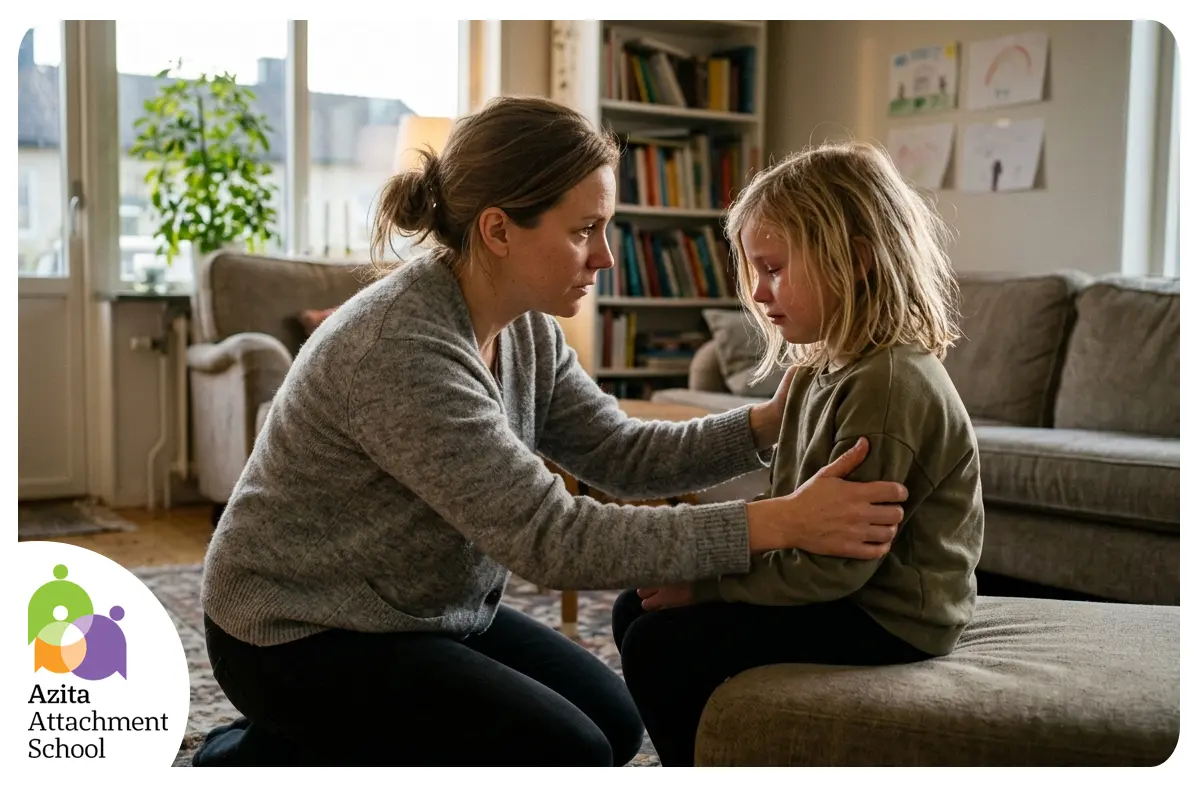
“I can see this really hurts.”
“Your body seems overwhelmed right now.”
This teaches children that emotions are manageable and safe.
2. Secure Parents Repair After Conflict
All parents make mistakes.
The difference is that secure parents repair the relationship afterward.
For example:
“I yelled earlier. I understand why that felt scary. I’m sorry.”
Repair teaches children:
- conflict does not equal abandonment
- relationships can survive mistakes
- emotional closeness can return after rupture
3. Secure Parents Prioritize Connection Over Control
Children cooperate more easily when they feel connected.
Secure parents often connect before correcting.
Instead of yelling from across the room,
they move closer,
make eye contact,
and regulate the interaction first.
4. Secure Parents Do Not Shame Emotions
Some children are highly sensitive.
Some are easily overwhelmed.
Secure parents do not mock emotional intensity.
Statements like:
- “Stop being dramatic.”
- “That’s nothing.”
- “You’re too sensitive.”
create shame.
Validation creates safety.
5. Secure Parents Set Boundaries Without Humiliation
Secure attachment does not mean permissiveness.
Secure parents can say:
“I understand you’re angry,
and I still cannot let you hit.”
The emotion is accepted.
The harmful behavior is limited.
This combination creates emotional safety.
6. Secure Parents Separate Worth from Achievement
Children who are only praised for success may begin to believe:
“I matter only when I perform.”
Secure parents notice:
- effort
- courage
- persistence
- and humanity
not only outcomes.
7. Secure Parents Regulate Themselves
Children are deeply shaped by the parent’s nervous system.
A parent who constantly explodes or panics
keeps the child’s body in a state of alert.
Secure parents try to:
- pause
- breathe
- and regulate themselves before reacting
8. Secure Parents Allow Mistakes
Children develop resilience through:
- frustration
- imperfection
- trial and error
- and recovery
Secure parents stay emotionally present,
without rescuing children from every discomfort.
9. Secure Parents Avoid Comparison
Comparison creates shame and insecurity.
When children constantly hear:
“Look how much better your sibling is.”
they begin to feel fundamentally inadequate.
Secure parents try to see the child’s unique path.
10. Secure Parents Are Emotionally Present
Physical presence alone is not enough.
Children need emotional presence:
- eye contact
- listening
- attention without distraction
- emotional accessibility
These small moments shape the developing brain.
How Secure Attachment Shapes Children
Children with secure attachment often develop:
- stronger emotional regulation
- healthier self-worth
- better resilience
- stronger relationships
- and lower anxiety
Secure attachment does not create perfect children.
It creates children with an internal sense of safety.
Common Misunderstanding: Secure Parents Are Always Calm
Many parents become anxious after learning about attachment parenting.
They worry:
“What if I damage my child?”
But children do not need perfection.
Winnicott’s concept of the “good enough parent” reminds us:
consistent emotional presence matters far more than flawless behavior.
Repair matters more than perfection.
Becoming a More Secure Parent
- Secure parenting is a process, not a personality trait.
It often involves:
- healing your own wounds
- learning regulation
- reducing shame
- practicing repair
- and becoming emotionally more available
Secure parents are not born.
They are gradually built through awareness and practice.
Conclusion
- Children do not need perfect parents.
They need parents who:
- return after rupture
- stay emotionally present
- and value connection over control
Secure attachment is built through ordinary moments:
- when a child cries and someone stays
- when a mistake happens and shame does not follow
- when emotions are welcomed instead of rejected
Over time,
these experiences become an internal belief:
“The world is not always perfect,
but I am safe in relationships.”
References
- Bowlby, J. (1988). A secure base: Parent-child attachment and healthy human development. Basic Books.
- Cassidy, J., & Shaver, P. R. (2016). Handbook of attachment: Theory, research, and clinical applications (3rd ed.). Guilford Press.
- Siegel, D. J., & Bryson, T. P. (2011). The whole-brain child. Delacorte Press.
- Wallin, D. J. (2007). Attachment in psychotherapy. Guilford Press.
- Winnicott, D. W. (1965). The maturational processes and the facilitating environment. Hogarth Press.




دیدگاه خود را بنویسید