

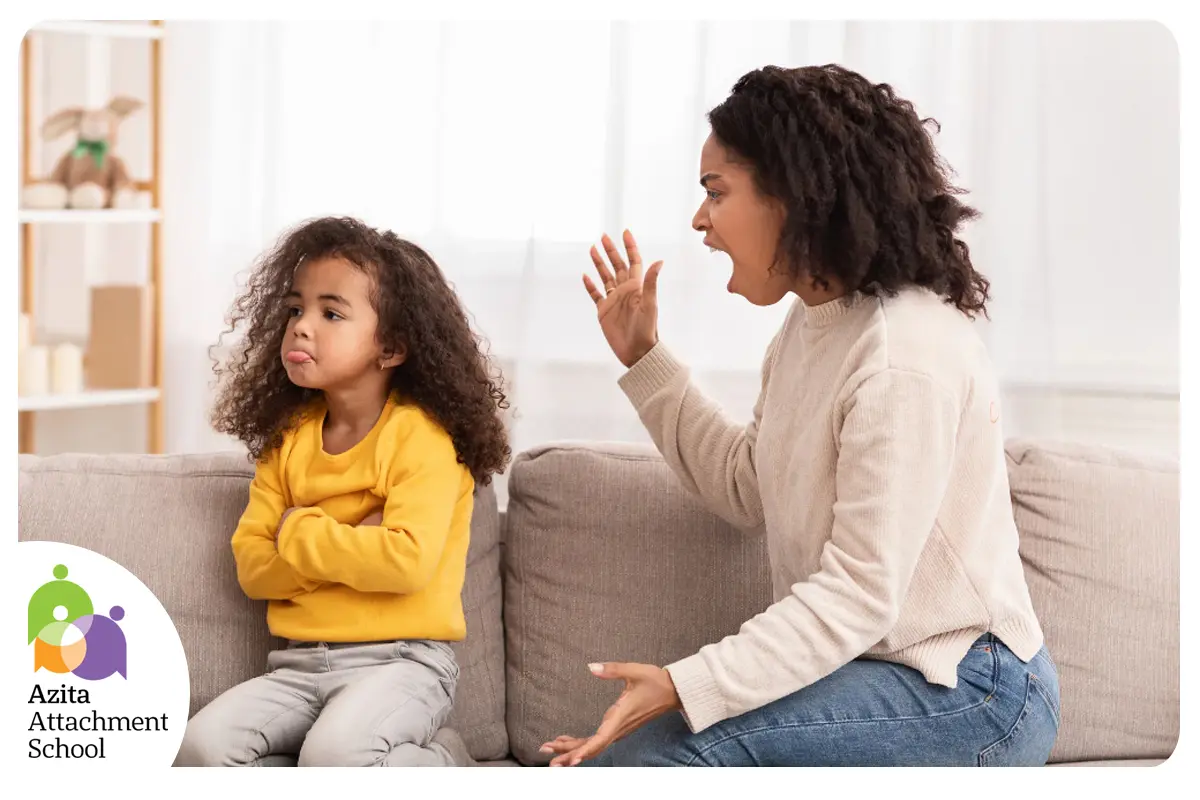
Introduction
Most parents who yell at their children do not do so because they lack love.
They yell because their nervous system becomes overwhelmed, their emotional capacities collapse, and they momentarily lose access to regulation.
This article does not aim to judge parents.
It aims to help them understand:
- Why yelling happens
- What occurs in the parent’s brain during anger
- How yelling affects the child’s nervous system
- How attachment patterns shape anger
- How to repair and break the cycle
Neuroscience and attachment research (Siegel, Schore, Maté) show that yelling is rarely an intentional act of harm.
It is a stress response, rooted in the parent’s history and neurobiology.
Why Parents Yell
A. The Brain Interprets the Child’s Behavior as Threat
When a child:
- Cries
- Refuses
- Melts down
- Argues
- Repeats a behavior
- Ignores instructions
the parent’s amygdala may interpret the situation as danger, not inconvenience.
The danger is emotional, not physical.
It is linked to the parent’s past experiences.
In this state:
- The amygdala fires
- The fight system activates
- The prefrontal cortex goes offline
- The body reacts before the mind thinks
The parent is not “choosing” to yell
the nervous system is choosing them.
B. Childhood History Shapes Adult Anger
Parents who grew up with:
- yelling
- shame
- emotional neglect
- violence
- unpredictability
- strict obedience
develop a hypersensitive alarm system.
The child’s normal behaviors of crying, resisting, and expressing needs can unconsciously trigger unresolved emotional memories.
C. Exhaustion Lowers Emotional Capacity
Sleep deprivation, work stress, migration stress, financial pressure, or isolation severely reduce the parent’s ability to regulate emotions.
A tired parent is not a weak parent
they are a parent with a depleted nervous system.
What Yelling Affects Children
A. Physiological Impact
When a parent yells, a child’s body experiences:
- rapid heartbeat
- shallow breathing
- cortisol spike
- freeze, flight, or fawn response
- threat perception
This reaction is automatic and not a sign of disobedience.
B. Psychological Meaning
Children cannot differentiate:
“my parent is overwhelmed”
from
“I am the problem.”
Yelling often leads children to internalize:
- “I am bad.”
- “My feelings are dangerous.”
- “Love disappears when I make a mistake.”
This can shape long-term patterns of shame, anxiety, perfectionism, or avoidance.
C. Modeling Emotional Regulation
Children learn how to respond to distress by watching their parents.
When parents handle stress through yelling, the child learns:
- anger = shouting
- stress = explosion
- conflict = threat
- emotions = danger
The lesson is embodied, not verbal.
Yelling as an Attachment Issue
Yelling is not a moral failure.
It is an attachment rupture caused by dysregulation.
The cycle typically looks like this:
- Child expresses a need
- Parent becomes overwhelmed
- Parent’s nervous system activates
- Parent yells
- Child becomes frightened and dysregulated
- Parent feels guilt and shame
- The cycle repeats
Understanding this cycle is the first step in interrupting it.
Breaking the Cycle of Yelling
A. The Six-Second Pause
Research shows the physiological wave of anger peaks for six seconds.
If parents can pause—breathe, step back, lower their voice the amygdala deactivates, allowing the prefrontal cortex to return online.
B. Regulate Your Body First
Ask yourself:
- What does my body feel right now?
- Where is the tension?
- How fast is my breathing?
Slow, long exhalations reduce arousal and shift the nervous system from fight mode to safety mode.
C. Reduce Emotional Load
Parents must reduce unnecessary stressors:
- multitasking less
- simplifying routines
- taking emotional breaks
- seeking support
- reducing perfectionistic expectations
A regulated parent is the strongest predictor of a regulated child.
D. Repair After Yelling
Repair is more important than prevention.
Effective repair includes:
- acknowledging your behavior
- taking responsibility
- validating the child’s feelings
- offering reconnection
- explaining without blaming
Repair teaches children:
“Relationships can rupture and still be safe.”
How to Talk to Your Child After You Yell
A secure-style repair sounds like:
“I yelled. That must have scared you.
It wasn’t your fault.
My body was overwhelmed.
I’m here now, and you are safe.”
This reassures the child’s nervous system and rebuilds trust.
Conclusion
Yelling is not evidence of bad parenting.
It is evidence of a nervous system carrying too much, too fast, without enough support.
When parents learn to regulate themselves, recognize triggers, and repair ruptures, they break a cycle that may have existed for generations.
Through awareness and compassion, parental anger becomes an opportunity for healing not harm.
References
Siegel, D. J. (2015). The Developing Mind.
Schore, A. N. (2012). Affect Regulation and the Origin of the Self.
Maté, G. (2010). When the Body Says No.
Panksepp, J. (1998). Affective Neuroscience.




دیدگاه خود را بنویسید